
Key Takeaways
- NIL programs create new financial and compliance risks for colleges and universities.
- Constantly evolving NIL rules are making long-term athletic department planning more challenging.
- Federal legislation may provide the structure and oversight many athletic leaders are seeking.
- NIL risk protection can help secure donor investments and strengthen program stability.
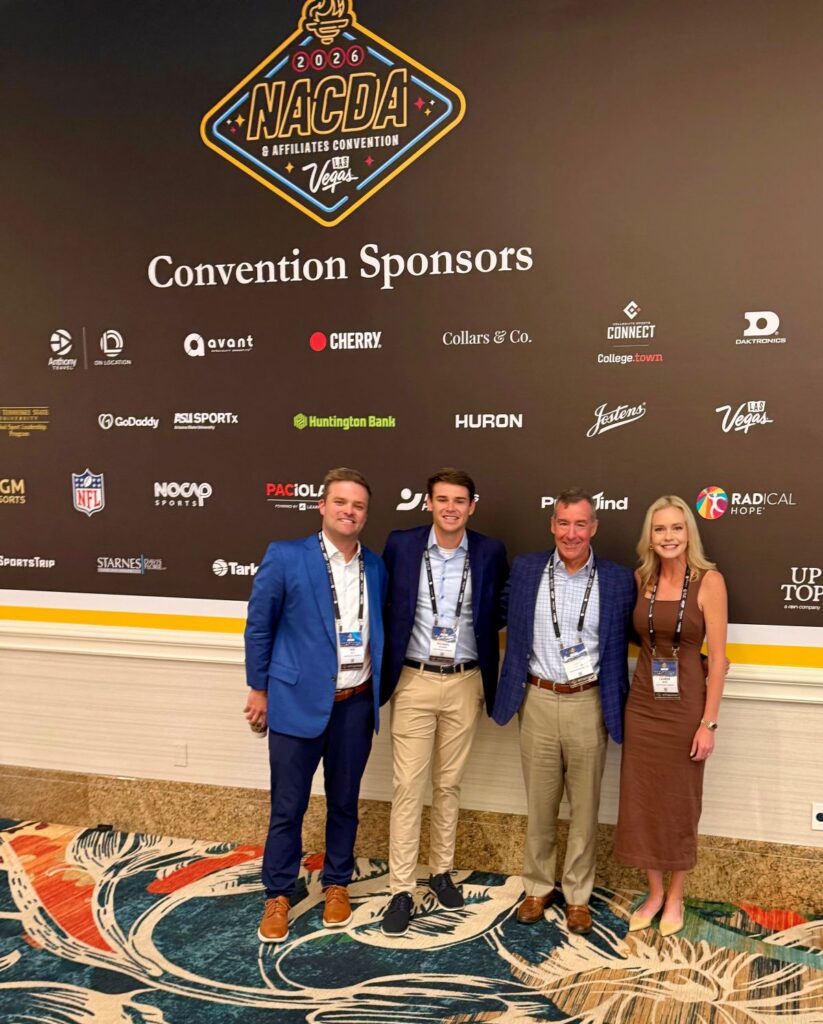
More than 6,500 leaders and industry experts came together for this year’s National Association of Collegiate Directors of Athletics (NACDA) conference in Las Vegas. With representatives from colleges and universities across the country as well as marketing, finance, compliance, and business strategists, this event is a significant milestone for NCAA athletics each year and the perfect place to learn about the ever-changing environment of college athletics.
Avant Specialty Benefits sponsored a panel discussion for college and university leaders interested in collegiate risk management. We were grateful for the opportunity to highlight our Collegiate Athletics Risk Management solutions and engage with staff navigating the complexities of name, image, and likeness (NIL) agreements with their student athletes.
Amid the uncertainty, higher education and athletic leaders remain committed to protecting their schools and students as NIL agreements continue to evolve. As athletic departments and donor collectives tackle a new school year, our insights from the NACDA conference shine a light on this evolving arena.
What is NIL?
NIL allows student-athletes to receive compensation for the use of their name, image, and likeness for commercial purposes—such as brand deals, sponsorships, and merchandise—as well as payments from university athletic departments and donor collectives.
NCAA schools have only been able to directly compensate these students as of July 1, 2025, following the House vs. NCAA Antitrust settlement which upended a rule that had been enforced within the NCAA and professional sports for more than 100 years. As it stands today, there is a cap of 22% of certain revenues or approximately $20.5 million per school for the 2025–26 academic year with annual increases moving forward.
Why Do Universities Need NIL Risk Management?
Regardless of NCAA division, a common topic among NACDA conference attendees we spoke to was the struggle of budget increases, as well as not knowing what the landscape will look like year-over-year or even week-to-week.
Athletic departments are increasingly looking for ways to protect NIL and revenue-sharing investments, reduce risks associated with injuries and athlete movement, and navigate a complex regulatory environment.
For institutions committing millions of dollars annually for athlete compensation, an NIL risk management strategy helps colleges, universities, and donor collectives manage their programs sustainably, protect donor investments, and establish stability as revenue sharing becomes normalized within college sports. By activating a structured placement approach with clear documentation and coordination, athletic leaders can ensure their team has clarity and protection.
College Athletics Leaders Need Clarity on NIL Rules
Throughout the conference, our team met with athletic staff coordinating their institution’s NIL practice to gain a deeper understanding of their experience and concerns.
The overwhelming theme of our conversations was that the NIL framework is constantly changing, making it difficult to plan for the long-term.
While the House vs. NCAA Antitrust settlement ultimately resolved without changing nationwide governance, those in the industry learned that while these parties have rules currently in place to protect their institutions, athletes, coaches, and faculty, they may not be able to rely on these rules when making concrete decisions from one week to the next, let alone from one academic year to another
This uncertainty has created a very short-term focus among many administrators. Common questions we heard included:
- Would the current direct revenue-sharing cap ($20.5 million per school) the House placed remain in force?
- If so, how could schools challenge the cap?
- How could schools finance additional costs that could exceed $20 million when most universities are struggling with large increases in their operating costs before the inclusion of NIL costs?
The general consensus was that the matter would ultimately need to be resolved through federal legislation or some form of collective bargaining with student-athletes.
Federal NIL Legislation Takes the Field: Protect College Sports Act
Speaking of federal legislation, we learned more about potential new legislation from Senators Ted Cruz (R-Texas), Maria Cantwell (D-Wash.), and Eric Schmitt (R-Texas) that would help govern numerous aspects of college sports, including the annual amounts schools can spend within their NIL programs.
There was a good deal of discussion of the Protect College Sports Act and its components. Though opinions were mixed on the proposed bill’s impact and some attendees expressed concerns about getting the larger leagues within the NCAA to advocate for the bill, there was a shared understanding that the current NIL environment needs more structure and oversight.
Ultimately, our hope is that this was a positive step when looking toward having a framework in place to officially govern the NIL marketplace, along with other significant areas of college athletics.
The Future of NIL Risk Management in College Athletics
The focus and goals of athletic departments and donor collectives will continue to change at a rapid pace, and whether the future involves federal legislation, collective bargaining, or the continuation of a loosely defined rule structure, NIL will require that colleges and universities stay aware and educated on the potential risks and opportunities that could empower certain schools to be more competitive than others.
Managing the risks involved with this space can be challenging to say the least. That’s why our team at Avant is excited to help institutions protect their finances and provide the best possible outcomes for their athletes and donors. If you’re curious about your institution’s NIL risk or want to learn more about our Collegiate Risk Management program, reach out to our team.